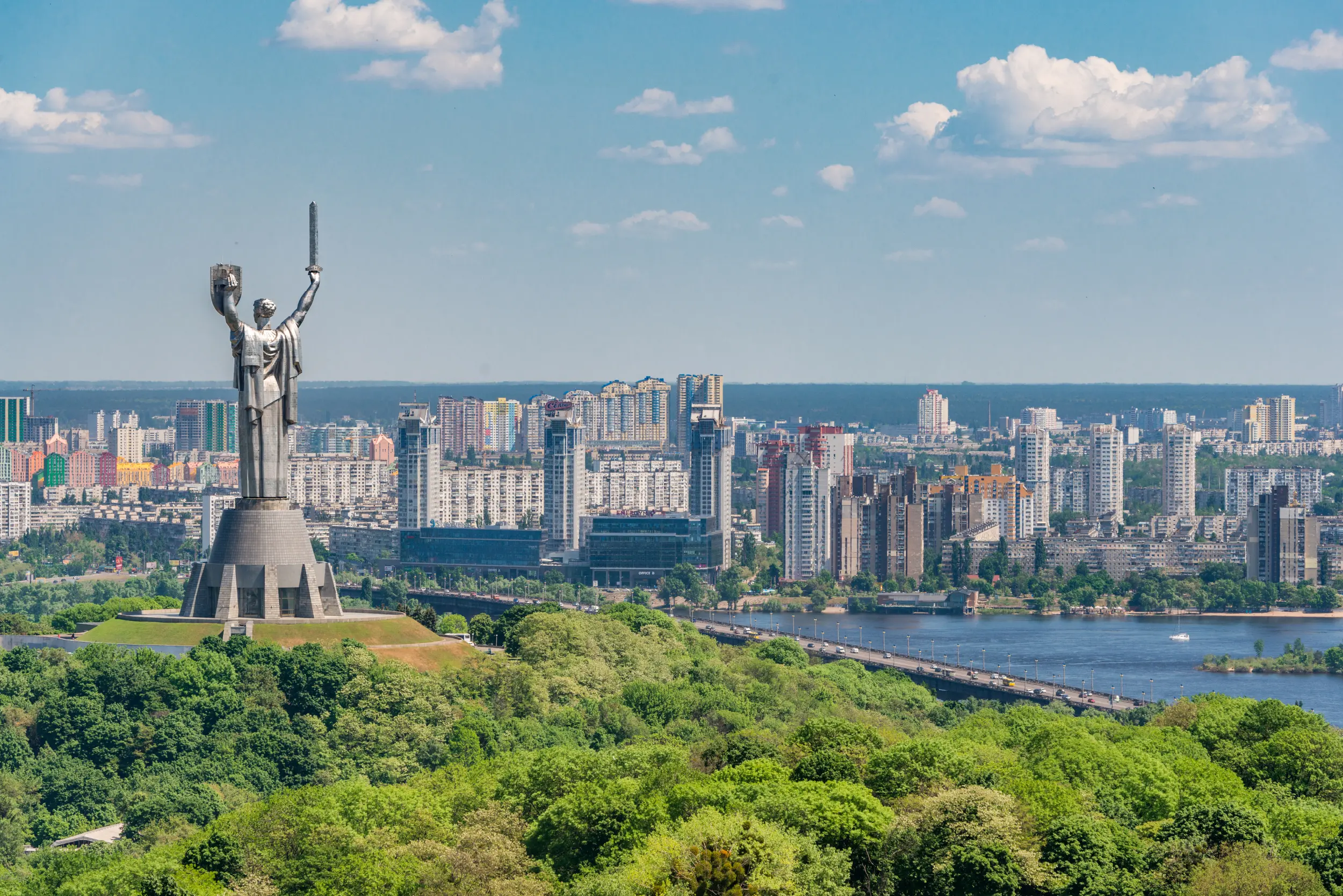
Ukraine today: Devastation & determination
The numbers tell only part of the story: more than 200,000 buildings damaged or destroyed, around 70% of centralised grid capacity lost and an estimated €500 billion needed to rebuild. Ukraine is enduring a severe infrastructure crisis, yet the country is still standing strong.
Ukraine is actively rebuilding, even as conflict continues. Several international donors are supporting Ukraine towards recovery, reconstruction and modernisation. Take the EU Ukraine Facility for example, which pledged 50 billion non-military aid in funding until 2028. EU accession is progressing in parallel, bringing regulatory alignment that is already opening doors for compliant foreign investors.
A genuine opportunity to help, and to grow
For Dutch companies in construction materials and technologies, or decentralised energy and resilience building an opportunity is present in Ukraine. There is a convergence of several trends: an urgent need, significant funding, a clear regulatory direction, and international financial backing. Ukrainian companies are ready to collaborate with Dutch partners that have expertise in both sectors. This is not a speculative market. The demand is real, the financing instruments are in place and the entry points are defined.
Critical supply deficits exist across bricks, cement, prefab panels, glass, insulation, and roofing. EU Green Deal compliance is required, which aligns directly with the strengths of Dutch suppliers already operating at that standard. On the energy side, distributed generation has become a national security priority. Solar microgrids, battery storage, and smart metering are needed urgently at municipal and household levels. New energy legislation (2023–24) actively favours renewables, and the IEA estimates $30 billion+ in clean energy investment ahead., The Ukrainian government wants to develop a sustainable and resilient Ukraine. One that is prepared for EU accession as well as shocks from external aggression.
Fortunately financing support is available to achieve that, through the EBRD and IFC, the European Investment Bank, Invest International, the EU Global Gateway energy corridor and the Ukraine Partnership Facility.
Go in together, go in strong
The companies that will make the greatest impact, and capture the most opportunity, are those that arrive with a collaborative mindset. A consortium of Dutch builders, materials suppliers, and energy facilitators communicates more efficiently, moves faster, and becomes a far more attractive partner to Ukrainian counterparts than fragmented individual actors. Joint ventures and consortia with local Ukrainian producers are a priority entry point identified by the Ukrainian government itself.
The window is open, but not forever
Ukraine’s reconstruction is happening as we speak. Preparing for what happens next is the second step. Acting now in support of mutual gains will help shape strong partnerships in the future, defining the next decade of rebuilding. The question is whether you are ready to define your strategy now.
Join our free webinar on 21 April 2026, Invest in Resilience: Ukraine Construction & Energy, where Larive’s local Ukraine partner and Miram Valstar from Invest International will cover the EU Ukraine Facility, regulatory landscape, energy independence priorities, and key financing pathways, followed by live Q&A.
The event has passed, but you can watch the webinar recording here:
Prefer to meet in person? Our Ukraine partner will also be present at the Larive Business Forum on 21 May 2026. Contact our colleague Pieter directly to discuss your specific opportunities.

FAQ
What is the EU Ukraine Facility?
The EU Ukraine Facility is a €50 billion fund committed by the European Union to support Ukraine’s recovery, reconstruction, and modernisation through 2027, covering infrastructure, energy, and institutional reforms.
How can Dutch companies enter the Ukrainian reconstruction market?
Common entry points include joint ventures with Ukrainian producers, consortia with other European suppliers, modular housing solutions, and specialised material supply. Regulatory alignment with EU standards is increasingly enabling compliant foreign investors to participate directly.
What financing is available for companies investing in Ukraine’s reconstruction?
Several instruments are available, including EBRD and IFC loans for supply chains, European Investment Bank financing, the EU Global Gateway energy corridor, Invest International support, and the Ukraine Partnership Facility.
Is it safe to do business in Ukraine right now?
Operating in Ukraine requires careful risk assessment. That said, many international businesses and financial institutions, including the EBRD and IFC, are actively engaged in the country. Larive’s local partner can provide current, on-the-ground context during the April webinar.
When is Larive’s Ukraine webinar?
Tuesday, 21 April 2026, from 11:00–11:45 CEST. It is free to attend. Register here.