
MedTech in India. With a population of 1.4 billion, a rapidly expanding middle class, and a government that has made healthcare modernisation a national priority, the sector represents one of the most compelling business development opportunities available in India today.
A sector at inflection point
India’s medical devices market was valued at approximately USD 16 billion in 2025 and is projected to reach USD 50 billion by 2030, growing at a CAGR exceeding 12%. The pharmaceutical sector already stands at USD 60 billion, ranking third globally by volume, while the broader bioeconomy reached USD 165.7 billion in 2024 with a USD 300 billion target by 2030. India’s government has committed USD 11.5 billion to its healthcare budget for 2025–26 and permits 100% FDI under the automatic route, a clear invitation to foreign investors.
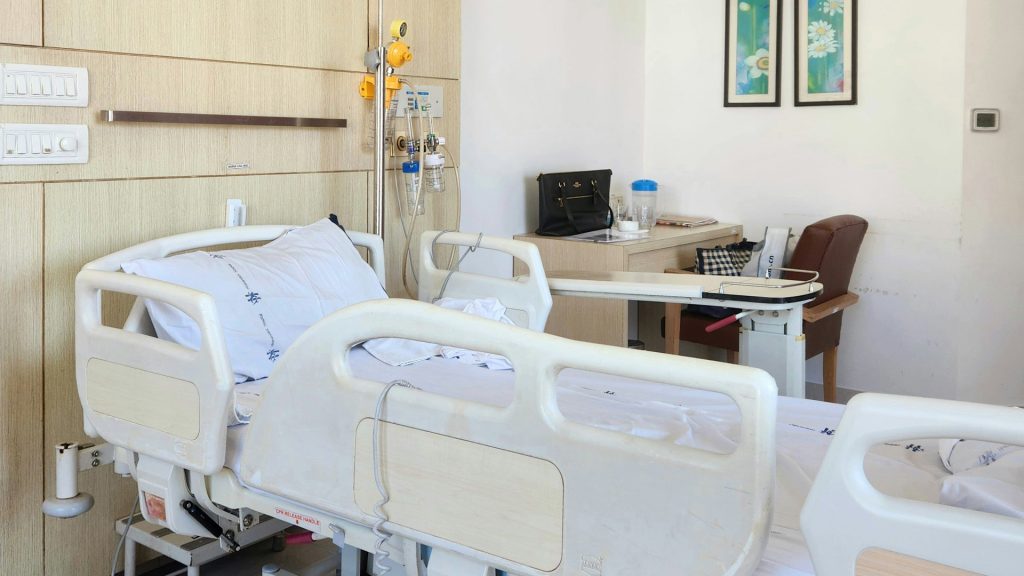
The single most important number for foreign suppliers: 80–85% of medical devices are still imported, representing over USD 8 billion in annual imports.
Bottlenecks and breakthroughs
The sector is not without friction. Regulatory navigation under CDSCO’s Medical Devices Rules 2017 requires foreign manufacturers to appoint an Indian Authorised Agent, obtain import licenses via the SUGAM portal, and budget 6–9 months for registration. Price sensitivity in Tier 2 and 3 markets, fragmented distribution infrastructure, and the need for local clinical validation all raise the bar for entry.
Yet the breakthroughs are accelerating.
- The government’s Production Linked Incentive (PLI) scheme is driving local manufacturing of MRI machines, CT scanners, and linear accelerators.
- Hyderabad’s Genome Valley hosts 200+ life sciences companies.
- The Andhra Pradesh MedTech Zone is the world’s largest medical devices manufacturing hub.
- The Ayushman Bharat Digital Mission has created 799 million+ digital health IDs connecting over 410,000 facilities.
- The eSanjeevani platform has processed 282 million+ telemedicine consultations, 12 million AI-assisted, making it the world’s largest government-run telemedicine system.
The Dutch opportunity
The Netherlands has deep strengths in precision manufacturing, diagnostics, digital health, agri-biotech, and high-value life sciences, precisely the capabilities India needs to close its import dependency gap. “Made in Europe” carries a premium in Indian hospital procurement, and India’s medical tourism boom (2.36 million patients from 210 countries between 2019 and 2024) fuels sustained demand for best-in-class imported devices.
Sub-sectors with immediate traction for Dutch exporters include In-Vitro Diagnostics (IVD), where the market is set to grow from USD 1.8 billion to USD 2.5 billion by 2030; digital health and AI diagnostics, projected to exceed USD 107 billion by 2033; and bioprocessing equipment for India’s fast-expanding biologics and biosimilars pipeline, underpinned by the government’s new USD 1.1 billion Biopharma SHAKTI initiative.
Strength in numbers | The consortium model
For an individual Dutch SME, the regulatory, cultural, and commercial learning curve can feel steep. But entering as part of a structured consortium, where complementary companies share market intelligence, split the cost of regulatory navigation, and present a broader value proposition to Indian partners, fundamentally changes the risk profile.
Consortium members can co-invest in a shared local representative, split the cost of clinical partnerships or pilot programmes, and cross-refer opportunities across the value chain. The model has precedent: global players like Medtronic (USD 350M investment in Hyderabad), Siemens Healthineers (USD 155M R&D hub in Bengaluru), and Stryker built their India presence incrementally and strategically. Dutch SMEs can do the same, smarter, faster, and with less exposure, when they move together.
Meet the experts: Larive Business Forum 2026 ‘Multi-annual programs summit’
On 20 May 2026, Larive International opens its headquarters in Zeist for the Larive Business Forum 2026 ‘Multi-annual programs summit’, an exclusive one-day event connecting Dutch boardrooms with on-the-ground regional experts across Asia, Eastern Europe, and Sub-Saharan Africa. The format is built around high-impact consortium sessions. No crowded panel stages, no generic presentations, only focused, expert-led conversations tailored to a consortium market entry strategy.
For the India MedTech opportunity specifically, you can meet Jai Mallick, Managing Director of Intralink India, who brings deep expertise in strategy, business development, and end-to-end project delivery for companies entering and exiting India. Ready to explore whether a consortium approach is right for your organisation? Contact Davinia Lamme at Larive International to secure your place and start the conversation.

FAQ
Q: Do Dutch medical device companies need a local partner to enter India?
A: While 100% FDI is permitted under the automatic route, foreign manufacturers are legally required to appoint an Indian Authorised Agent (IAA) for regulatory filings. A trusted local partner also significantly accelerates market access and reduces commercial risk.
Q: How long does it take to register a medical device in India?
A: Registration under CDSCO typically takes 6–9 months. Applications are submitted via the SUGAM online portal, and once granted, licenses carry perpetual validity with a retention fee every five years.
Q: What is the PLI scheme and how does it benefit European companies?
A: India’s Production Linked Incentive (PLI) scheme provides financial incentives to boost domestic manufacturing. European companies can benefit by entering joint ventures or technology transfer agreements with Indian manufacturers who qualify for PLI support.
Q: Why is a consortium approach recommended for SMEs?
A: Entering India as a consortium allows companies to share the costs of regulatory compliance, local representation, and market research, while presenting a more complete value proposition to Indian buyers and government bodies, reducing both financial and strategic risk.
Q: What sectors offer the fastest entry for Dutch MedTech companies?
A: In-Vitro Diagnostics, digital health software, bioprocessing equipment, and precision surgical instruments are among the highest-demand, import-dependent segments where European quality commands a market premium.
Q: How do I find out more about the Larive Business Forum 2026 ‘Multi-annual programs summit’?
A: Contact Davinia Lamme directly for more information and to register for the 20 May 2026 event in Zeist.