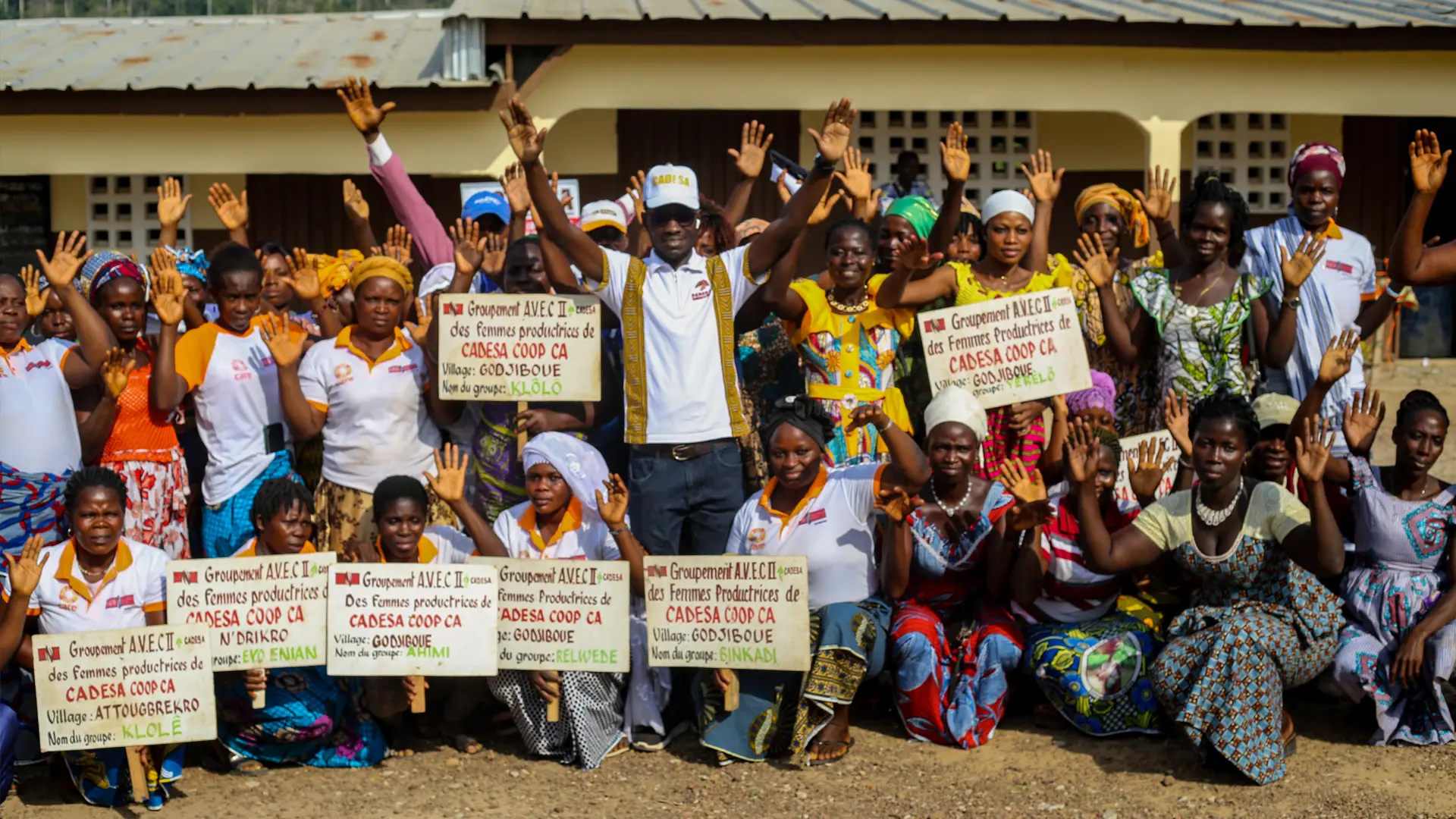
On 23 July 2026, CADESA COOP CA marks a major step towards a different model for cocoa value creation in Côte d’Ivoire: The foundation stone-laying ceremony for a processing facility owned by cocoa farmers.
The facility in San Pedro is designed to become the country’s first farmer-owned cocoa processing plant. Instead of selling only raw beans, CADESA will process part of its cocoa into cocoa mass. This allows the cooperative and its members to capture a larger share of the value generated further along the supply chain.
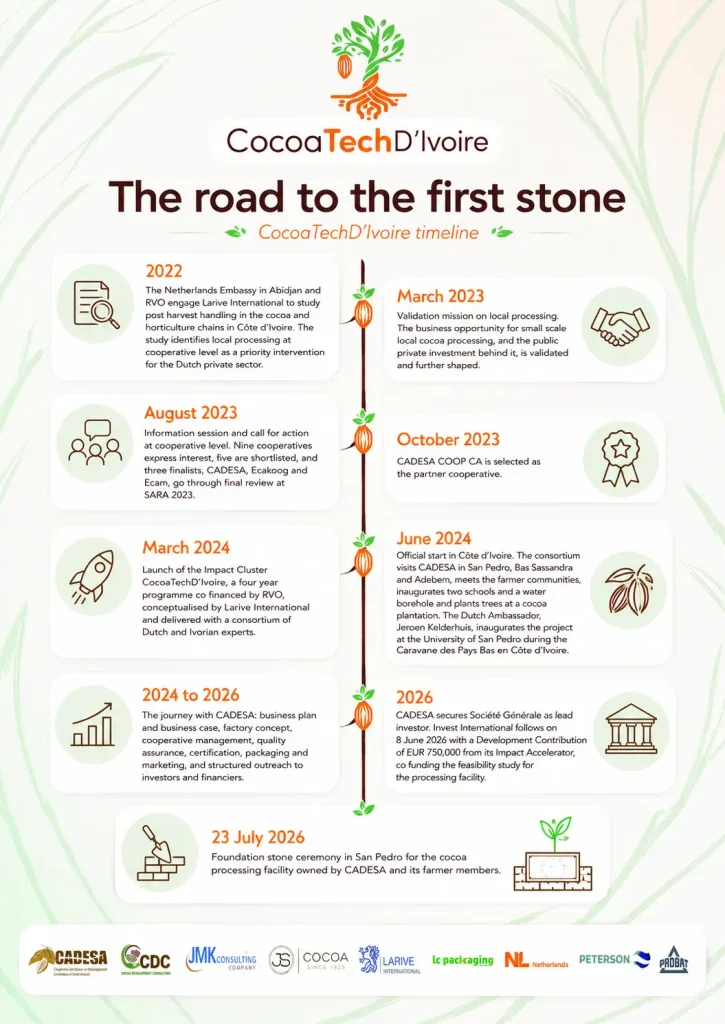
The foundation stone is a visible milestone. The work behind it began four years earlier.
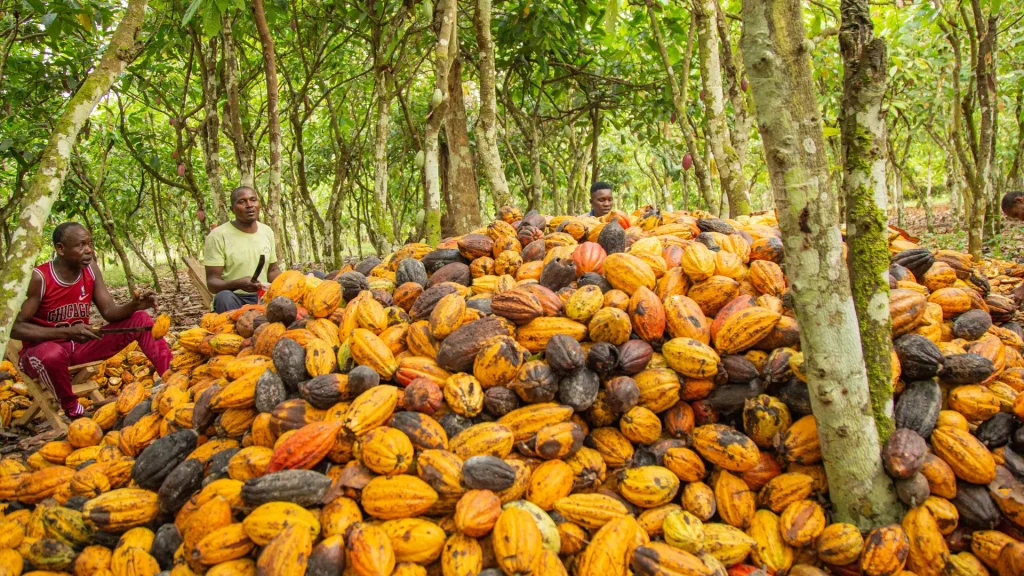
Beyond post-harvest handling
Back in 2022, the Netherlands Embassy in Abidjan and the Netherlands Enterprise Agency (RVO) engaged Larive International to study post-harvest handling in the Ivorian cocoa sector.
The findings revealed an inconvenient truth for supply chain stakeholders. While improving post-harvest handling is necessary, it is not sufficient for significant economic transformation. To truly raise farmer incomes, the cooperative needed to move up the value chain. Local processing emerged as the most promising intervention, presenting a clear opportunity for a public-private partnership combining Ivorian ambition with Dutch processing technology.
Structuring a consortium
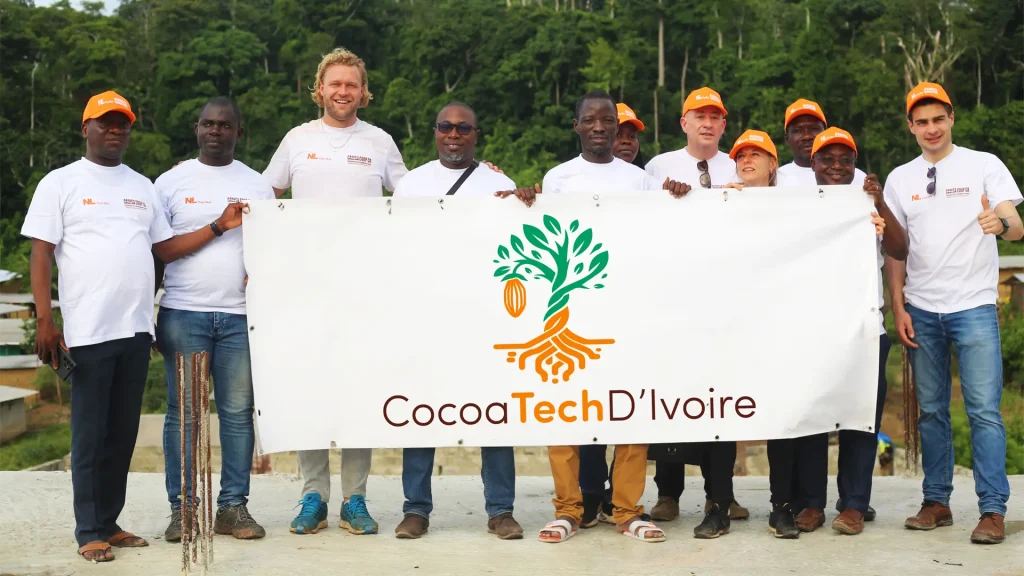
Identifying an opportunity is distinctly different from developing a commercially viable project. So the Larive team took on the role of initiator and coordinator, launching the CocoaTechD’Ivoire Impact Cluster in March 2024 to bridge the gap between concept and execution.
We approached this by building a comprehensive consortium capable of addressing every segment of the value chain. By uniting Dutch and Ivorian experts, including Probat, Royal LC Packaging, JS Cocoa, Peterson Projects, Control Union Pest Management (EcO2), Cocoa Development Consulting, and JMK Consulting, Larive structured a collaborative framework that mitigated execution risk. Over the past two years, this coalition worked closely with CADESA to test commercial assumptions, design the factory concept, and implement stringent quality assurance and certification protocols.
Financing a first of its kind
A first-of-its-kind asset presents significant financing bottlenecks. Without a historical blueprint for a farmer-owned processing plant, traditional capital is difficult to secure. Financiers had to evaluate both the commercial viability of the processing model and the cooperative’s capacity for governance.
By professionalising CADESA’s operations and presenting a thoroughly derisked business case, the consortium successfully attracted institutional backing. Société Générale stepped in as the lead investor, while Invest International provided a €750,000 Development Contribution through its Impact Accelerator on 8 June 2026. This financial structure exemplifies the Dutch combination approach, unlocking new market avenues for Dutch knowledge and equipment while keeping processing profits in Côte d’Ivoire.
Why farmer ownership matters
Local ownership fundamentally rewrites the economic reality for CADESA’s network. An estimated 3,600 smallholder farmers will capture a price premium projected at 10 percent above current levels, alongside a direct share in the factory’s processing profits.
Commercially, the operation establishes a resilient local enterprise that supports 47 direct jobs and an estimated 600 indirect roles, all paying a living wage. Furthermore, the consortium has integrated climate resilience into the project, equipping farmers with technical support to navigate the increasing threats of drought and flooding.
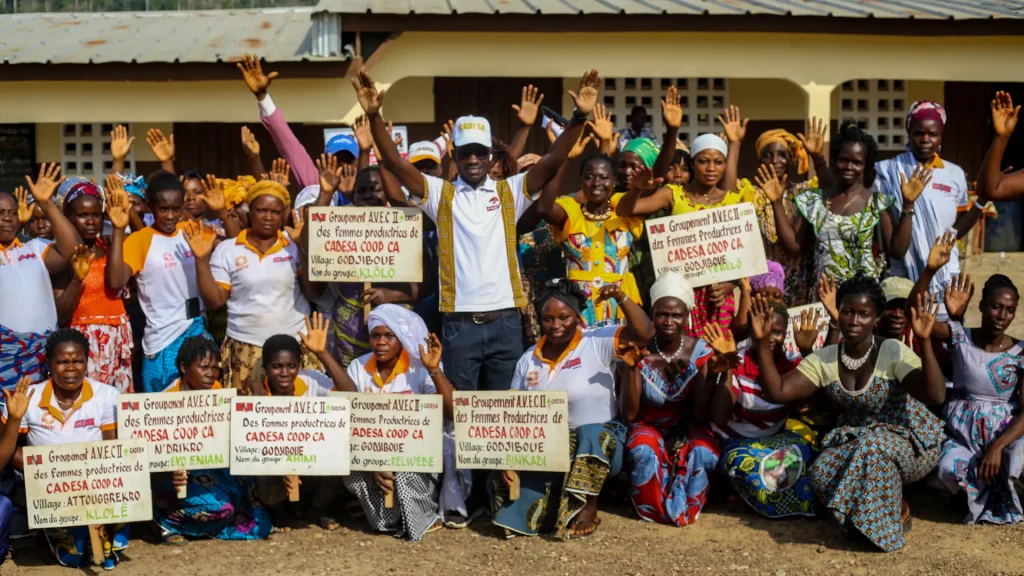
The wider significance lies in the precedent. A successful CADESA facility could demonstrate that cooperatives can move beyond supplying raw commodities and participate directly in processing and value creation.
The real test comes next
The foundation stone recognises four years of coalition building, business development and investment preparation. It does not mark the end of the process.
The real measure of success will be the first tonne of cocoa mass processed, marketed and owned by the farmers who cultivated the beans.
FAQ
What is CocoaTechD’Ivoire?
CocoaTechD’Ivoire is a four year Impact Cluster co financed by RVO and coordinated by Larive International. It supports CADESA in developing a farmer owned cocoa processing facility in San Pedro.
Why is the CADESA facility significant?
It is designed to become Côte d’Ivoire’s first cocoa processing plant owned by cocoa farmers, allowing cooperative members to capture value from processing as well as cocoa production.
What will the facility produce?
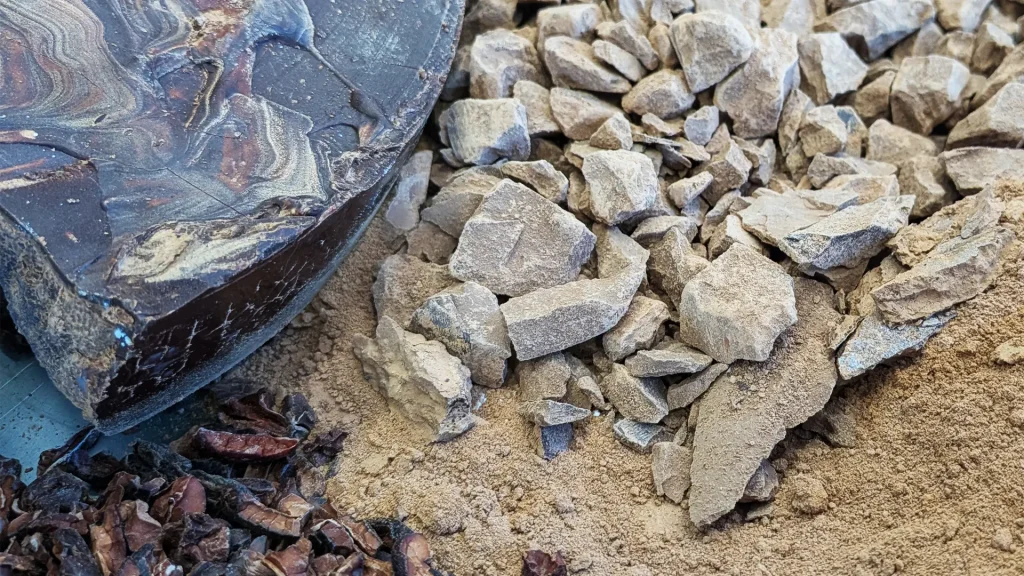
The facility will process cocoa beans into cocoa mass, an intermediate product used in further cocoa and chocolate manufacturing.
How are farmers expected to benefit?
Farmers are expected to receive higher prices for their beans and participate in the profits generated by the cooperative owned facility.
How does the project benefit Dutch companies?
The project creates a market for Dutch processing technology, packaging solutions, technical knowledge and professional services while supporting local value creation in Côte d’Ivoire.
What is Larive International’s role?
Larive identified and validated the opportunity, selected and connected the project partners, conceptualised the programme and coordinates the development of the commercial, technical and financing proposition.