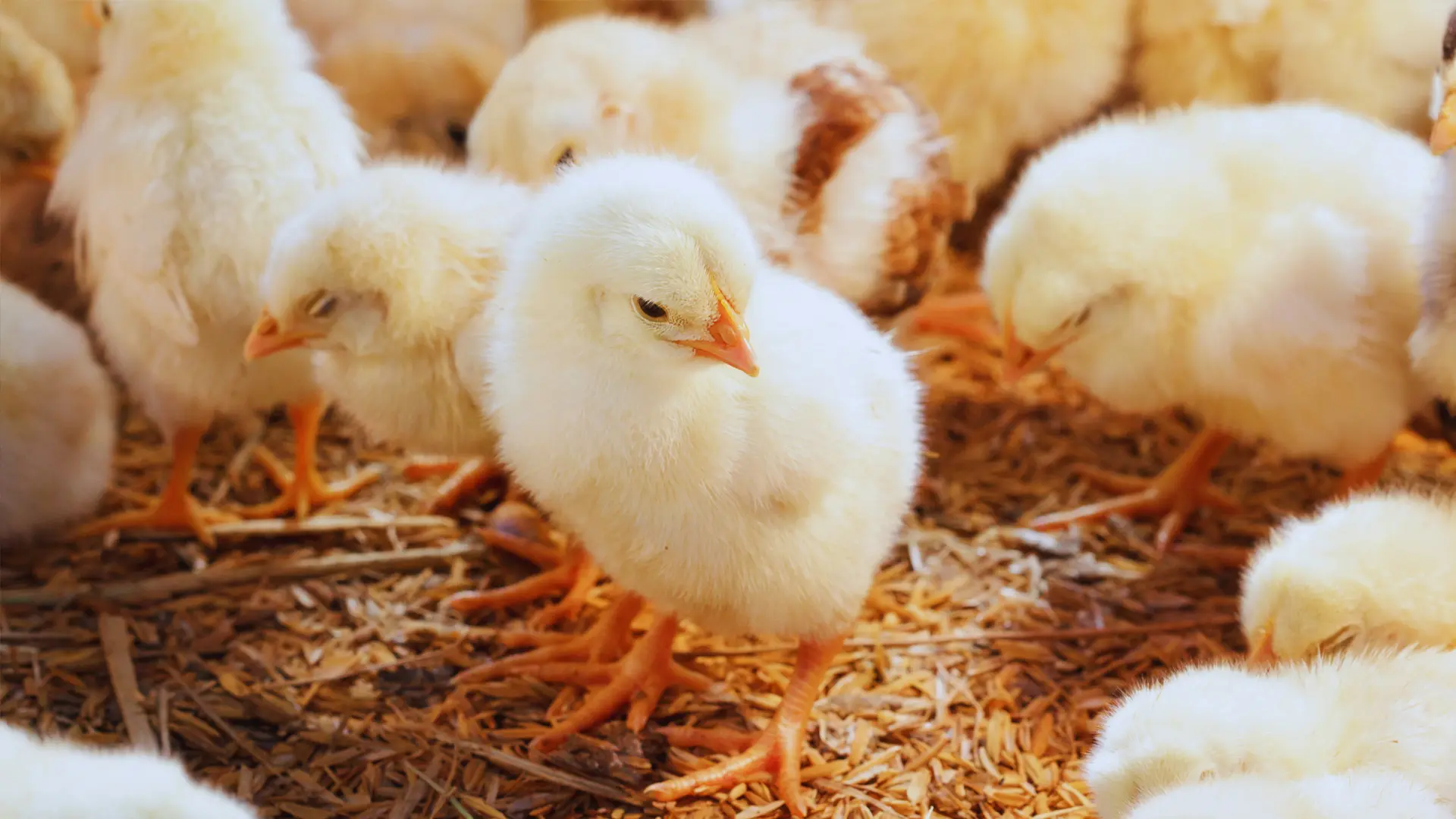
Closing a five-year chapter, opening a new one
After five years of joint effort between Dutch and Bangladeshi partners, PoultryTechBangladesh has reached its conclusion, not as an endpoint, but as proof that modern poultry production works commercially under Bangladeshi conditions.
The partnership is co-funded by the Embassy of the Kingdom of the Netherlands in Bangladesh and the Netherlands Enterprise Agency (RVO), and coordinated by Larive International alongside LightCastle Partners. Sixteen Dutch and Bangladeshi companies, from genetics and equipment specialists to feed and processing experts, were brought together around a single mandate: turn technical potential into operational reality.
A sector that feeds a nation, underfunded for its role
Poultry employs roughly 2.5 million people in Bangladesh and keeps the country largely self-sufficient in meat and eggs. Yet flock mortality has climbed as high as 30% in places, driven by weak biosecurity and poor disease control, while feed, around 70% of production cost, remains volatile because millers depend heavily on imports and lack formulation expertise. Financing is concentrated among large integrated players, leaving small and mid-sized farmers, who still make up most of the sector, without the capital or information to invest confidently. The gap between the sector’s national importance and the quality of investment it has historically received is precisely what PoultryTechBangladesh set out to close.
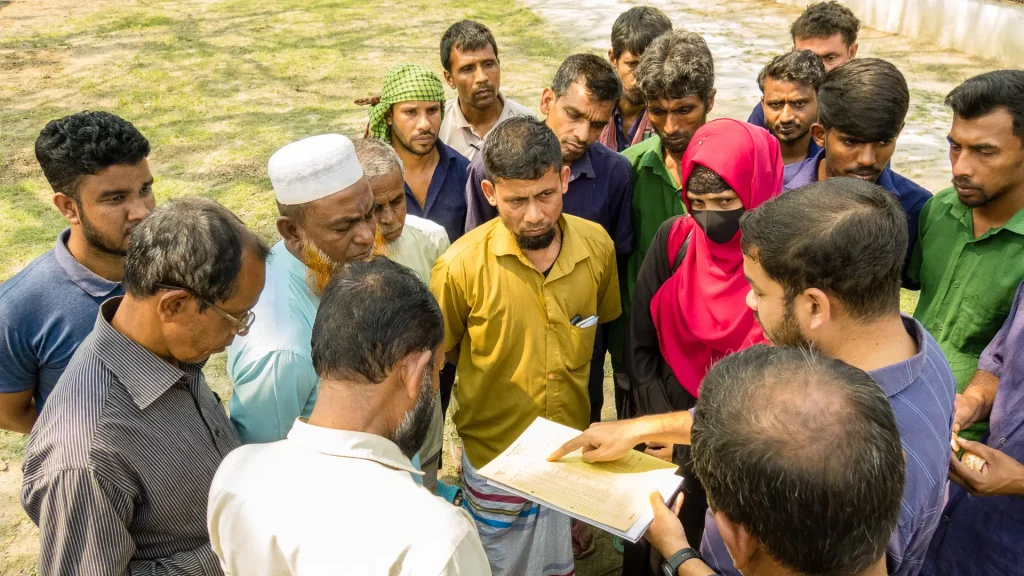
From demonstration to adoption: What the project built
PoultryTechBangladesh intervened at every stage of the value chain through four pillars: technology demonstration, capacity building, knowledge generation, and cross-border connection.
Three demonstration sites anchored the programme.
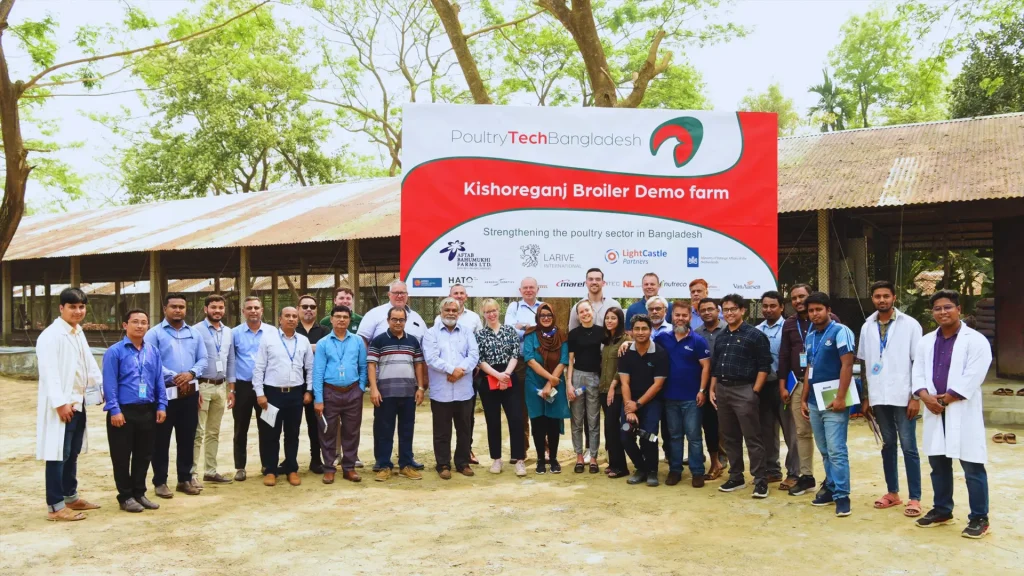
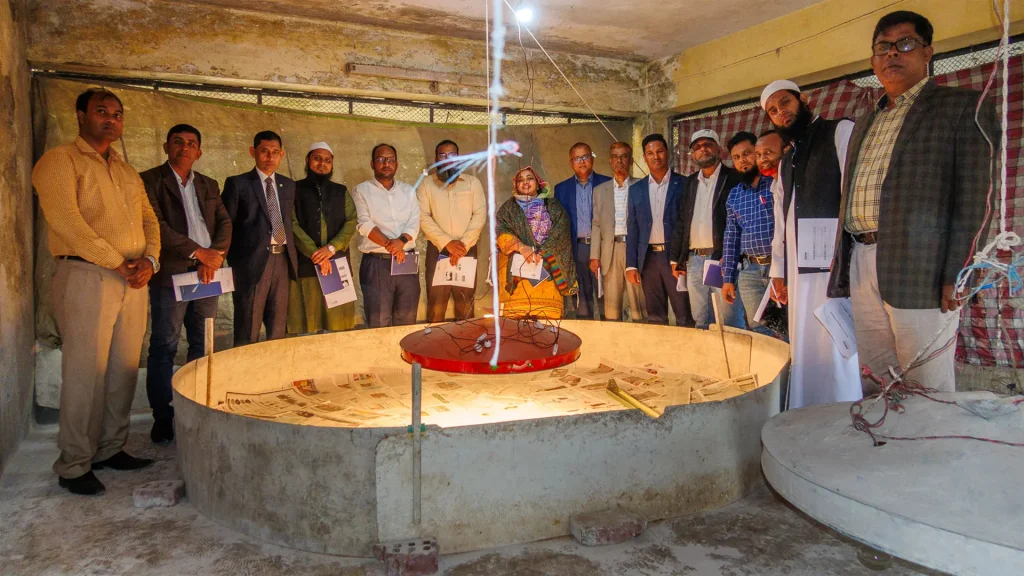
- At Aftab Bahumukhi Farms in Kishoreganj, a broiler facility combining brownfield upgrades and new construction became operational in Q1 2023 with eight commercial sheds and four for R&D.
- At Nourish Poultry and Hatchery in Tangail and Bogra, a layer site hosted Hendrix Genetics’ trials of three SASSO coloured broiler variants under local conditions, extending to smallholder and women-led farms.
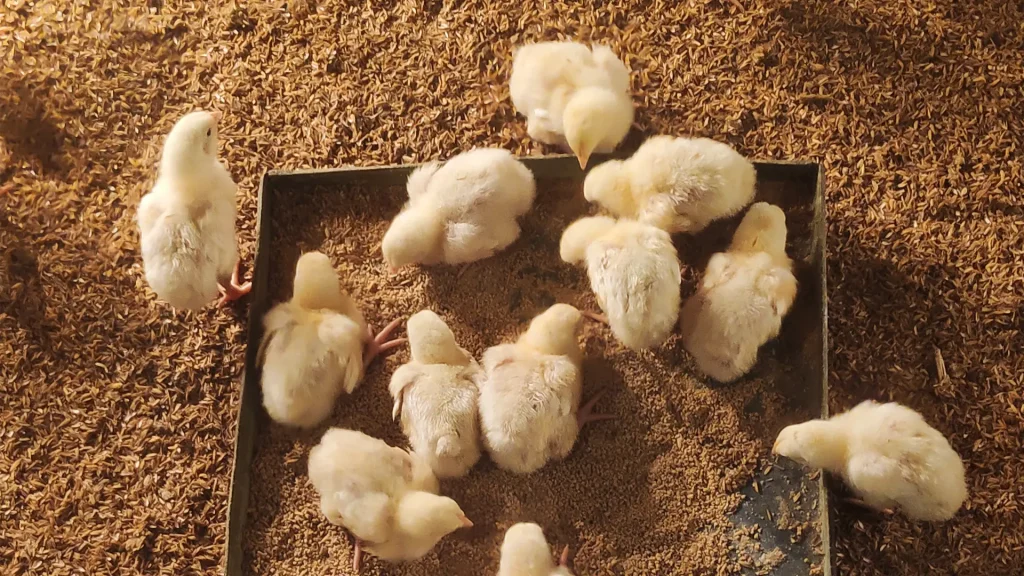
- At QuickChicks in Panchbibi, Royal Pas Reform’s SmartStart system, operational by Q4 2025, gave day-old chicks immediate post-hatch access to feed, water and light, a meaningful upgrade on standard hatchery practice.
Training reached both depth and scale.
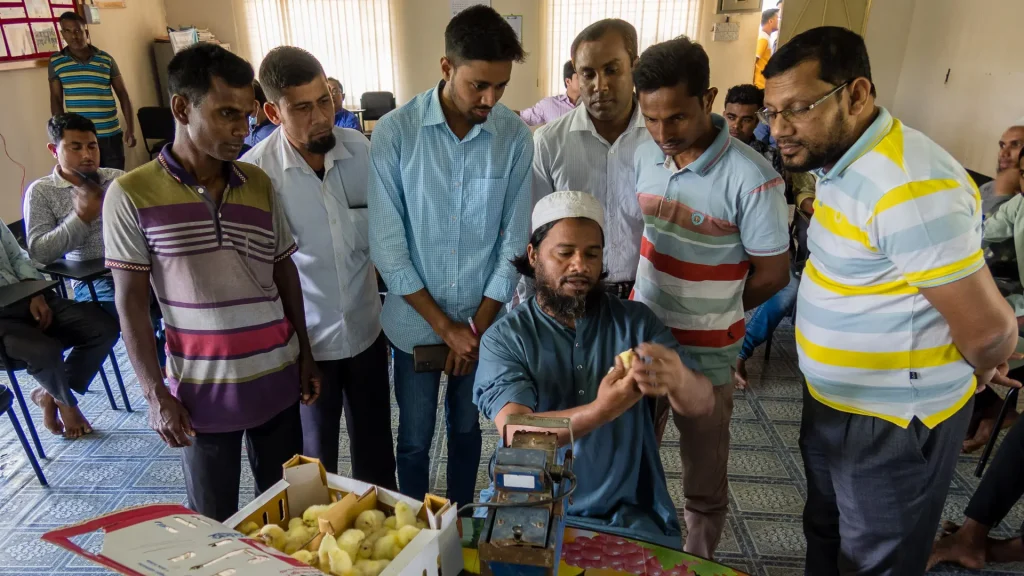
- Aeres Training Centre International trained 70 direct participants (including 21 youth and women) as master farmers, reaching over 150 farmers indirectly, and delivered a Training-of-Trainers session to 29 government trainers within the Department of Youth Development, embedding poultry knowledge into national training infrastructure.
- Royal Pas Reform trained 55 hatchery and breeding professionals.
- Van Aarsen trained feed mill staff across six companies and audited operations against European welfare and safety benchmarks.
- Nutreco analysed roughly 480 feed samples across mills, farmers and integrators to strengthen procurement decisions and reduce antibiotic dependence.
In total, more than 1,750 small farmers received direct sustainable-production training.
Connection-building proved equally consequential: three impact tours, an incoming delegation of 13 Bangladeshi stakeholders to the Netherlands, participation in the Bangladesh-Netherlands Agri-Business Conclave, eight stakeholder dinners and seven roundtables. Altogether, the project directly engaged 696 stakeholders and reached over 10,440 more through cascading networks and media coverage, with 13 Dutch companies now exploring investment, trade or service delivery in Bangladesh.
A legacy beyond the project
The demonstration sites continue operating, generating data and hosting visitors long after formal project closure. The SASSO breed trials give producers evidence-based grounds for genetics transitions. Feed mill manuals and audits give millers a practical roadmap toward efficiency and international standards. And the trained cohort, master farmers, hatchery managers, feed technicians, and government trainers, carries this knowledge forward through their own networks, a deliberately designed cascading effect rather than a one-off intervention.
Looking ahead
The partnership’s runtime may have come to an end, but its results and effects will still be felt over the next years. By combining the milestone demonstration farms with a trained workforce, a technical evidence base and cross-border partnerships, a new standard has been created on which the sector can continue to grow.
To further support this professionalisation, sustained collaboration between government, industry and development partners is of great importance. The same counts for more dynamic finance structures to help SMSE’s further invest.
For international poultry companies, Bangladesh remains a sizeable but complex market. Success depends largely on locally validated solutions, trusted partnerships and a clear understanding of commercial and institutional realities. For private companies seeking to enter or grow in the dynamic poultry sector of Bangladesh, Larive International is very well positioned to support your journey as we lower the cost, reduce the risk, and shorten the time. Reach out to our colleague Bart for more information. On the other hand, through a public-private partnership, the value chain as a whole can be uplifted creating opportunities and effects extending far beyond the runtime of the project. The PoultryTechBangladesh partnership has provided a practical foundation for the next phase.
FAQ
What was PoultryTechBangladesh?
A five-year public-private partnership (2020–2025) co-funded by the Dutch Embassy in Bangladesh and RVO, coordinated by Larive International and LightCastle Partners, bringing together Dutch and Bangladeshi poultry companies to modernise Bangladesh’s poultry value chain.
Who were the main partners involved?
Sixteen organisations including Aeres Training Centre International, Aftab Bahumukhi Farms, HATO Agricultural Lighting, Hendrix Genetics, Kazi Farms, Larive International, LightCastle Partners, Marel Poultry, Mavitec, Nourish, Nutreco, Paragon Group, Provita, Quick Chicks, Royal Pas Reform, Van Aarsen
What were the demonstration sites?
A broiler farm at Aftab Bahumukhi Farms, a layer/SASSO breed trial site at Nourish Poultry and Hatchery, and a modernised hatchery at QuickChicks featuring Royal Pas Reform’s SmartStart system.
What challenges remain for Bangladesh’s poultry sector?
Access to finance for small and mid-sized farmers, weak enforcement of existing policy frameworks, and the shift toward formal slaughtering and processing.
How can companies engage with similar market-entry opportunities?
Through consortium-based approaches like PoultryTechBangladesh, coordinated by organisations such as Larive International that combine local networks, technical partners, and development funding to reduce market-entry risk.