A deal two decades in the making
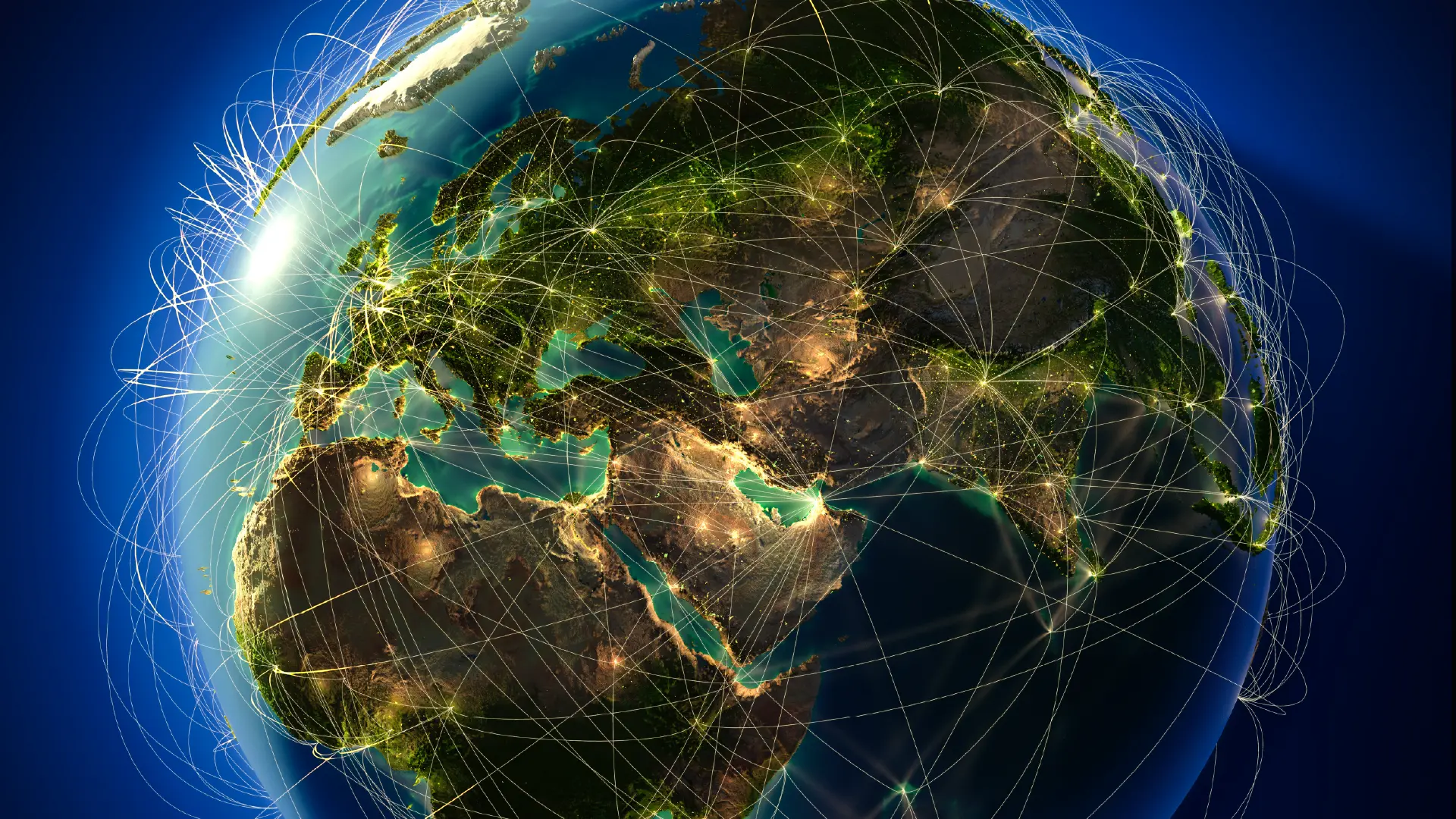
When EU Commission President Ursula von der Leyen declared “we have delivered the mother of all deals” in January 2026, it wasn’t hyperbole. After negotiations that began in 2007, stalled in 2013 over patent protection, data security and professional mobility rights, and were relaunched in 2022, the European Union and India have concluded the largest free trade agreement either party has ever signed. The world’s second- and fourth-largest economies, together representing approximately 25% of global GDP and two billion people, have formally chosen a partnership.
This is a strategic repositioning in a world where, as von der Leyen put it at Davos, trade is increasingly being “used as a weapon”. At a moment when the United States is erecting tariff barriers and global supply chains face mounting political risk, both Brussels and New Delhi made a deliberate choice: rules-based cooperation still works.
The scale of what was agreed
The numbers embedded in this agreement are substantial and deserve careful reading. Under the deal, India will eliminate or reduce tariffs on 96.6% of EU exports by value, generating approximately €4 billion per year in savings for European exporters. The European Commission projects that annual EU goods exports to India, currently around €48.8 billion, will increase by 107.6% by 2032, effectively doubling to €150 billion. The EU, in turn, will eliminate or reduce tariffs on 99.5% of Indian goods, opening Europe’s market to India’s labour-intensive industries including textiles, leather, footwear, gems and jewellery, and marine products.
Beyond goods, the deal commits to opening 144 services subsectors on the EU side, particularly IT, professional services and education, and facilitates easier movement of skilled professionals between the two economies. A comprehensive mobility framework for Indian corporate employees, contractual service suppliers and independent professionals is included, alongside a commitment to conclude Social Security Agreements with all EU Member States within five years.
Critically, the deal also includes a partnership on security and defence. Brussels has expressed the explicit hope that India, historically a major buyer of Russian arms, will look increasingly toward European suppliers. A bilateral safeguard mechanism protects both sides from sudden import surges, and both parties commit to implementing the Paris Climate Agreement as part of the sustainability framework.
The ratification process remains ongoing. India’s Commerce Minister Piyush Goyal confirmed the final legal review is expected to be completed in 2026, after which the agreement will enter into force.
What this means for the Netherlands
Despite India being the world’s fourth-largest economy, the bilateral trade relationship with the Netherlands remains surprisingly underdeveloped. CBS data (Central Bureau of Statistics Netherlands) shows that less than 0.5% of total Dutch goods exports, approximately €2.3 billion in 2025, flow to India, while Indian imports into the Netherlands stood at nearly €5 billion. This asymmetry is partly structural, partly a product of the very tariff walls the FTA now begins to dismantle.
The Dutch business community has responded with measured optimism. Trades Unions VNO-NCW and MKB-Nederland described the deal as “an important step in strengthening the European economy and increasing our geopolitical autonomy”. Leading Dutch-rooted multinationals, among them Heineken, ASML and Unilever, already treat India as a major growth market, with Heineken and Unilever producing locally in-country. The FTA now creates the conditions for a much broader set of Dutch companies to follow.
Three priority sectors for Dutch companies
- Agricultural technology and food systems
India is the world’s second-largest food producer after China, yet it carries a relatively low yield per hectare and suffers significant post-harvest losses. The FTA includes tariff relief on a wide range of agricultural inputs, and the Netherlands, the world’s second-largest agricultural exporter per capita, sits in a uniquely powerful position. Dutch companies with expertise in precision agriculture, greenhouse technology, food processing equipment and post-harvest management have an opening that did not exist before. FME chair Theo Henrar specifically named this as one of the most immediate areas of opportunity. - Machinery and industrial equipment
Indian tariffs on machinery currently reach as high as 44%. Under the FTA, these come down significantly, making European, and specifically Dutch, industrial equipment meaningfully more price-competitive in a market of 1.45 billion people undergoing rapid industrialisation. For Dutch machine builders, system integrators and equipment manufacturers, this represents a structural improvement in market access that could take years to fully materialise but starts now. - Water, energy and infrastructure technology
India’s infrastructure buildout is one of the defining economic stories of this decade. The FTA facilitates easier entry into professional and environmental services sectors, and India’s push to scale renewable energy and water infrastructure aligns directly with Dutch strengths in water management, smart grids and sustainable energy solutions. Combined with the FTA’s commitment to climate cooperation, this creates a durable, policy-backed demand signal.
The long view
Short-term, expect a period of adjustment: legal revision and translation into all EU languages, Council adoption, European Parliament ratification, and India’s own legal vetting process all lie ahead. Companies that begin their preparation now, mapping market opportunities, identifying local partners and building relationships, will be measurably better positioned when the tariff reductions begin to take effect.
Long-term, the implications are more profound. The FTA locks in a stable and predictable regulatory environment for exporters, the kind of environment that makes long-term investment decisions possible. By diversifying European trade relationships away from overdependence on the US and China, it also strengthens the geopolitical resilience of Dutch and European companies operating globally. As VNO-NCW noted, this is as much about strategic autonomy as it is about market access.
Don’t navigate this alone
The opportunity is real, but India remains a complex market to enter. Regulatory environments vary by state, local partnerships determine outcomes and the distance between policy announcement and commercial reality can be wide. Understanding which sectors to prioritise, which Indian partners to trust and how to structure your market entry requires local knowledge built over years, not weeks.
Larive International is organising a dedicated webinar on the EU-India FTA and what it means for Dutch businesses. Register here to join the webinar on Wednesday 25 of February and read more about it here.
On March 18 and 19, our Larive Group partner from India will also be visiting the Netherlands, an exceptional opportunity for a direct, expert conversation about on-the-ground market realities. Register here and learn more about the visit here.
For more than 50 years, Larive has supported over 500 organisations with market entry and growth in emerging markets across 25 countries, including India. We shorten the time, lower the costs and reduce the risks of doing business in markets that reward expertise and penalise improvisation. Get in touch with our colleague Laura to discuss what this FTA means for your specific situation.
FAQ
What is the EU-India FTA?
A comprehensive free trade agreement concluded in January 2026 that eliminates or reduces tariffs on the vast majority of goods and services traded between the EU and India. It is the largest trade deal either party has ever signed.
When does it come into force?
The agreement still requires ratification by EU institutions and India’s own legal process. India’s Commerce Ministry expects this to be completed in 2026.
How will it affect Dutch business specifically?
Tariff reductions will make Dutch goods, especially in agro-technology, machinery and industrial equipment, substantially more price-competitive in India. The deal also facilitates easier access to India’s services markets.
Which Dutch sectors benefit most?
Agricultural technology and food systems, industrial machinery and manufacturing equipment, and water and energy infrastructure are the three priority sectors with the strongest alignment between Dutch expertise and Indian market demand.
Are there risks?
Yes. Some quotas and residual tariffs remain, particularly in the automotive sector. Sensitive sectors are protected on both sides. Businesses should not treat the FTA as an instant gateway; local knowledge, trusted partnerships and proper market preparation remain essential.
Does Larive have a presence in India?
Yes. Larive has been active in India as part of its network of locally rooted partner offices across more than 25 emerging markets. Contact us at [email protected] to discuss your India strategy.
Sources: Het Financieele Dagblad; The European Commision; Department of commerce, Ministry of commerce and industry, Government of India; World Economic Forum