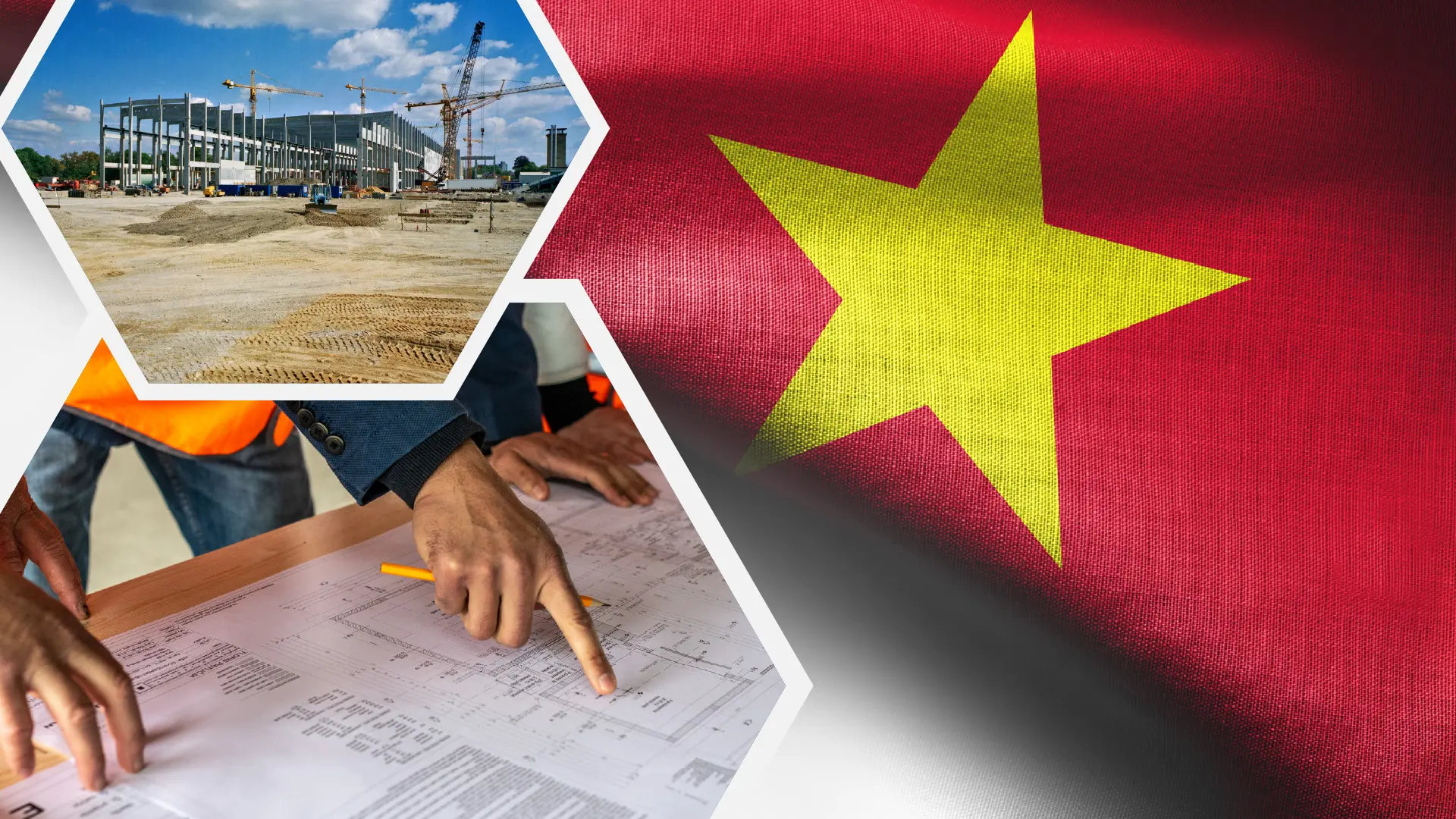
Vietnam is building at a pace few markets can match. The country’s real estate sector, currently valued at roughly USD 70 billion, is projected to reach USD 127 billion by 2030. Foreign investors poured USD 3.7 billion into new real estate projects in 2025 alone, accounting for 21% of total FDI. From the mega-scale Long Thành Airport City to a wave of luxury hotel openings and Grade-A office towers, the construction pipeline is deep, long-term, and increasingly quality-driven.
For Dutch companies specialising in façade systems, interior finishes, flooring, acoustic solutions, and building installations, the timing is hard to ignore.
A market shifting toward quality
What makes this cycle different is the calibre of demand. International hotel groups, Marriott, Accor, Hilton, IHG, and Nobu are increasingly expanding across Vietnam. Ho Chi Minh City hotels already report 83% occupancy at an average daily rate of USD 140. International tourist arrivals surpassed pre-COVID levels in 2025, reaching 21 million.
In commercial real estate, multinational tenants are pushing for LEED-certified, green-standard offices. Prime rents are rising in both HCMC and Hanoi, and supply is struggling to keep pace, with 180,000 m² of new office space expected in HCMC by the end of 2026. For European suppliers with proven sustainability credentials, this is a natural fit.
Long Thành: The catalyst
Vietnam’s largest infrastructure investment, the USD 18.7 billion Long Thành International Airport, is reshaping the east of HCMC into a full-scale development corridor. Think Schiphol-style: a 7,400-hectare zone encompassing commercial districts, hotels, logistics hubs, and innovation parks. The airport expects 25 million passengers when commercial flights launch at the end of 2026, scaling to 100 million by 2035. The surrounding hospitality and mixed-use pipeline will demand building products at a scale and quality which opens up opportunities for high-end Dutch suppliers.

The Dutch advantage, but not alone
Here is the strategic reality: entering Vietnam as a single supplier is an uphill battle. Vietnamese developers and contractors are far more receptive to a coordinated package, a consortium of complementary Dutch specialists who can communicate efficiently, deliver integrated solutions, and reduce procurement complexity. Even more important, as a consortium, you are better equipped to build meaningful business relationships with Vietnamese project developers. A model that embraces local business culture and local partners can turn a market-entry challenge into a genuine competitive advantage.
The window is open, act on it
The projects being tendered and designed today will define Vietnam’s built environment for the next decade. If you are considering this market, the moment to shape your strategy is now, and it is best to shape it together.
Two ways to take the next step:
- Register for our webinar on Vietnam Real Estate opportunities, 15 April 2026. Hear directly from our local partner on the ground in Ho Chi Minh City.
- Join the Larive Business Forum on 21 May 2026 and meet our Vietnam partner in person.
Want to explore what the opportunity looks like for your company specifically? Contact our colleague Bart Wolberink to start the conversation.

Frequently Asked Questions
Is Vietnam’s construction boom sustainable, or is it a short-term spike? Multiple structural drivers underpin the growth: sustained FDI inflows, a national airport expansion plan (22 to 30 airports by 2030), rising international tourism, and an urbanising middle class. The pipeline extends well into the 2030s, particularly around infrastructure corridors like Long Thành.
Why would Vietnamese developers prefer a Dutch consortium over individual suppliers? Vietnamese construction firms value efficiency and reliability. A coordinated group of complementary suppliers, covering, say, façades, flooring, and acoustic systems, reduces the number of procurement relationships and offers integrated quality assurance. It is a simpler, more attractive proposition than managing multiple foreign vendors independently.
What changed in Vietnamese legislation in 2025 that benefits European companies? Recent legal reforms have improved market transparency, streamlined foreign participation in real estate, and strengthened intellectual property protections, all of which lower the entry threshold for European building product companies.
Do I need a local partner to enter the Vietnamese market? While not legally required in all cases, having an experienced local partner dramatically improves your chances of success. They navigate regulatory processes, broker introductions, and help you understand procurement culture. Larive International maintains a permanent presence in Ho Chi Minh City for exactly this purpose.
What types of Dutch building products are most in demand? The strongest demand is for premium façade systems, acoustic ceiling solutions, fire-rated doors and partitions, raised access flooring, sustainable interior finishes, and advanced building installation systems, particularly for hospitality and Grade-A office projects.