The potential of advanced aquaculture technology is clear, but turning that potential into a consistent and profitable business requires more than high-end hardware. It requires data, resilience, and a deep understanding of operational management at shrimp and fish farms.
Within the FoodTechBangladesh Partnership, one of the core objectives is to understand and improve aquaculture practices through research at our four Centres of Excellence (CoE) in Khulna, Cox’s Bazar, Mymensingh and Patuakhali. The programme takes a step-by-step approach to modernisation, working across a range of aquaculture systems. This includes more traditional pond-based methods as well as advanced technologies such as recirculating aquaculture systems (RAS) and in-pond raceway systems (IPRS), which serve as the foundation for optimising overall output.
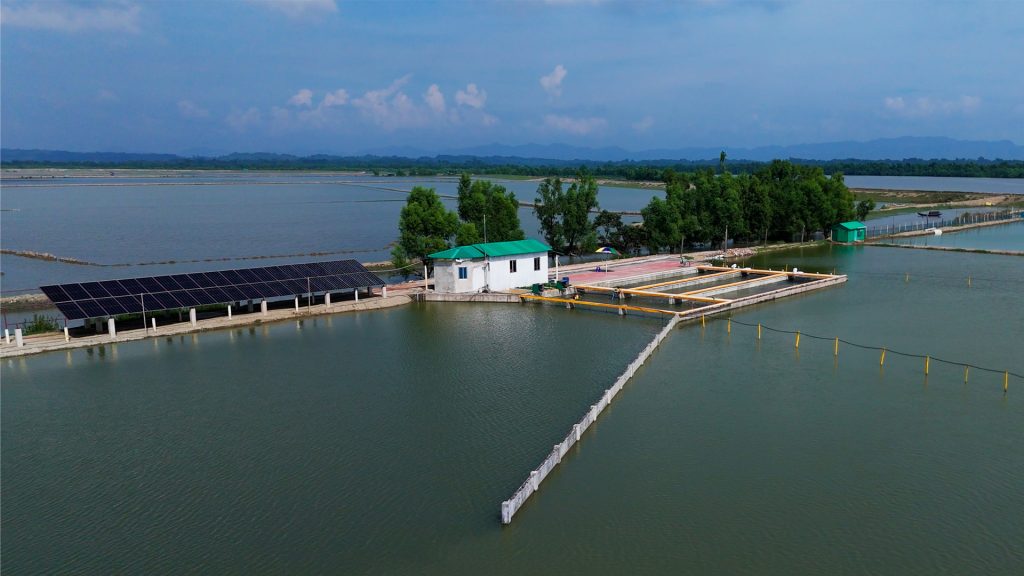
In total, 24 research trials spread across the four CoEs are being conducted from April 2025 until February 2027. Each trial is designed to understand exactly how every input, from kilowatt-hours to feed quality, impacts the output for a Bangladeshi aquaculture farmer. This article looks at the trials conducted so far and what they reveal about building a viable business case for aquaculture farming in Bangladesh.
Evaluating tilapia performance in Khulna
The trials at the CoE in Khulna, led by Gemini, show how setbacks in a controlled environment can become stepping stones to success in the field. The first RAS trial lasted 113 days and focused on high-density tilapia in a concrete tank RAS system, with a stocking density of 15 fish/sq ft. meaning fingerlings of around 3 gram each. They were and fed floating feed three times per day. Midway through the cycle, a significant challenge emerged: the unpredictable monsoon season. Severe storms caused extended power outages, and without a robust backup system, the trial saw nearly 50% stock loss.
While the financial outcome was affected, the data gathered was invaluable. It demonstrated that in aquaculture farming, an uninterrupted power supply is not just a preference. It is a mandatory pillar of the business case for high-density farming.
Changing strategy to koi species in Khulna
The second trial in Khulna, also 113 days, took a different approach. Koi carp was selected for its hardiness and ability to tolerate lower oxygen levels, an important trait given that a reliable backup power source could not be guaranteed. Fish were stocked at a lower density of 5 fish/sq ft and fed 1.26 MT of floating feed three times per day. The result was a major milestone: the facility’s first profitable cycle.
Gemini also identified significant cost-saving opportunities by refining how energy-intensive equipment was used. Based on expert guidelines from FoodTechBangladesh partner Viqon, it became clear that air blowers are not needed at the start of a cycle. By delaying their use until day 35, energy consumption dropped dramatically, from 7,000 kWh in the first trial to just 2,300 kWh in the second. This trial demonstrated that the right species selection, solar backup power, and smart energy protocols can make RAS farming a profitable venture for local entrepreneurs.
Working with the IPRS model in Cox’s Bazar
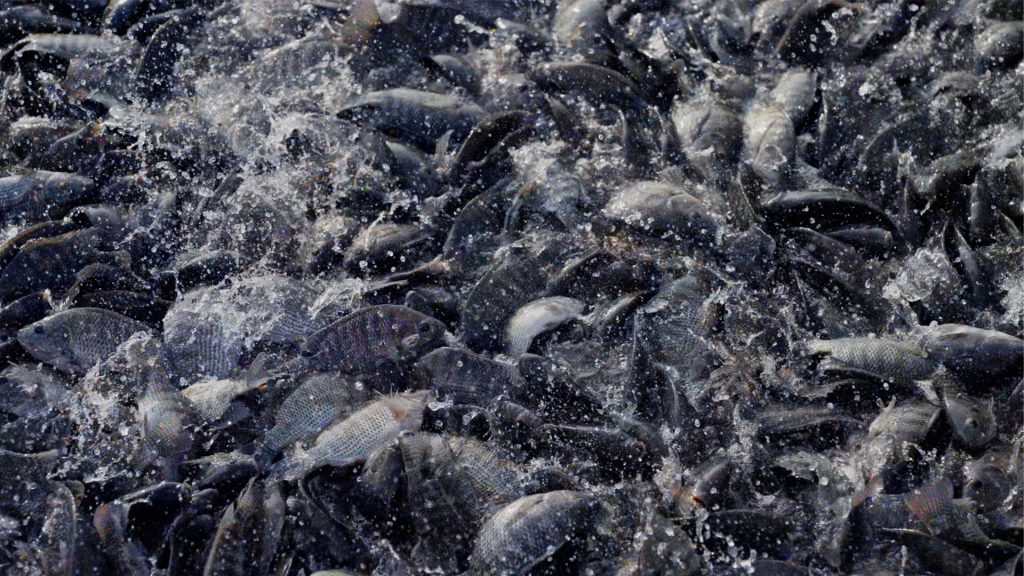
Across the country at the CoE in Cox’s Bazar, Fishtech has been refining the In-Pond Raceway System (IPRS). Three 100-day trials with Nile tilapia showcased the system’s ability to produce high-quality fish in an environmentally responsible way. The trials were carried out in one pond of 10,000 m² with three raceway cells of about 220 m³ each. Tilapia fingerlings weighing 30-45 gr were stocked at a density of 182 fish/m³, equal to 40,000 fish per cell. The fish were fed commercial pellets three times daily, starting with 35% protein feed and shifting to 32% as they grew.
The fish were cultured entirely without the use of antibiotics, disinfectants, or pesticides. Solid waste, which is collected at the end of the raceway, could also be explored as a potential agricultural fertiliser.
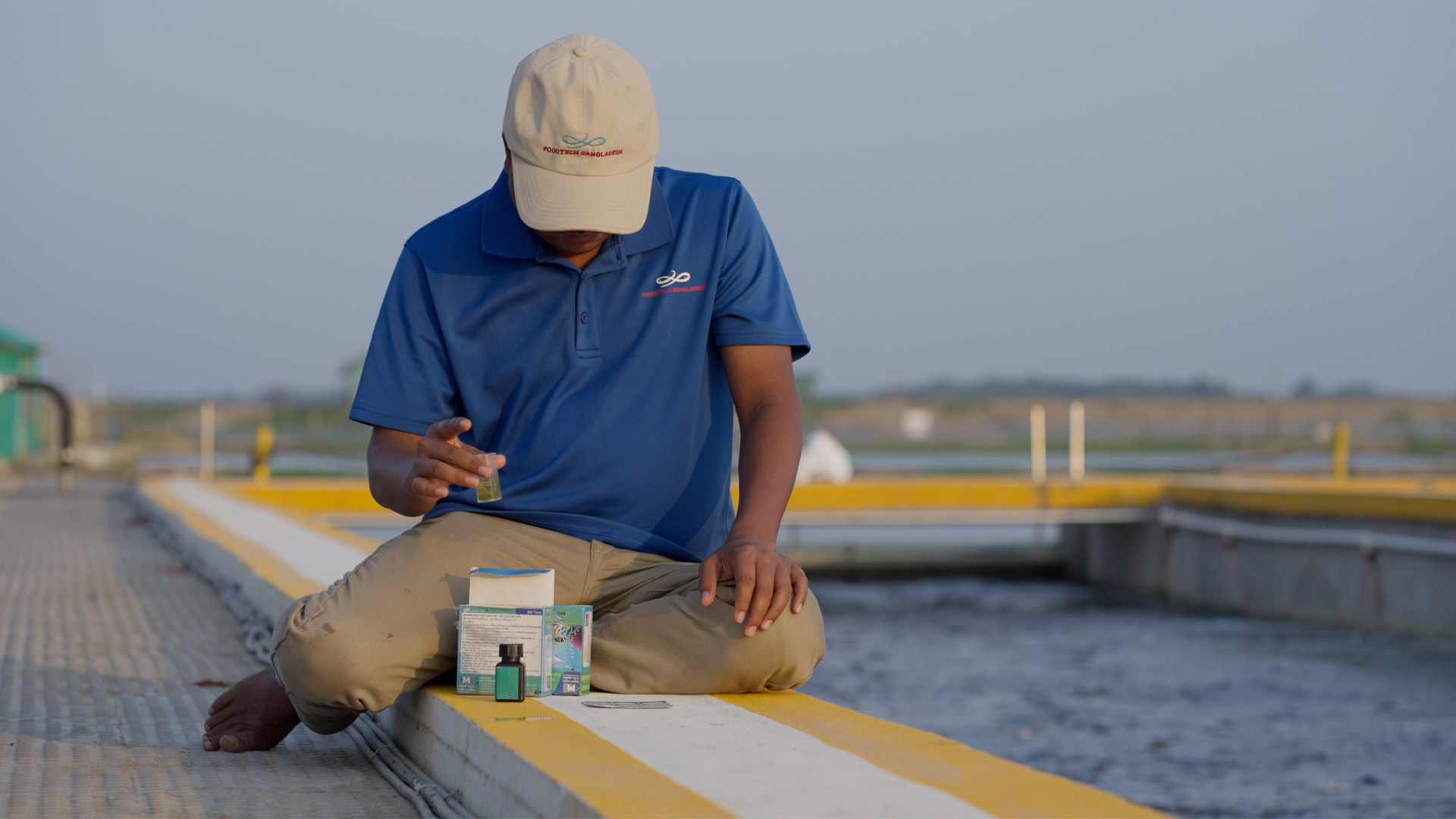
The trial also revealed a critical variable in the aquaculture value chain: the power of genetics. The data showed that even within the same controlled environment, fish sourced from lower-quality genetic stock resulted in a higher feed conversion ratio (FCR), directly increasing the cost per kilogram produced. Survival rates remained high, ranging from 91.7% to 94.4%, and body weights of 238 to 256 gr. Power supply again proved critical, as occasional disruptions to aeration and water circulation caused one cell to underperform. Over time, the team built practical experience that led to more effective IPRS management.
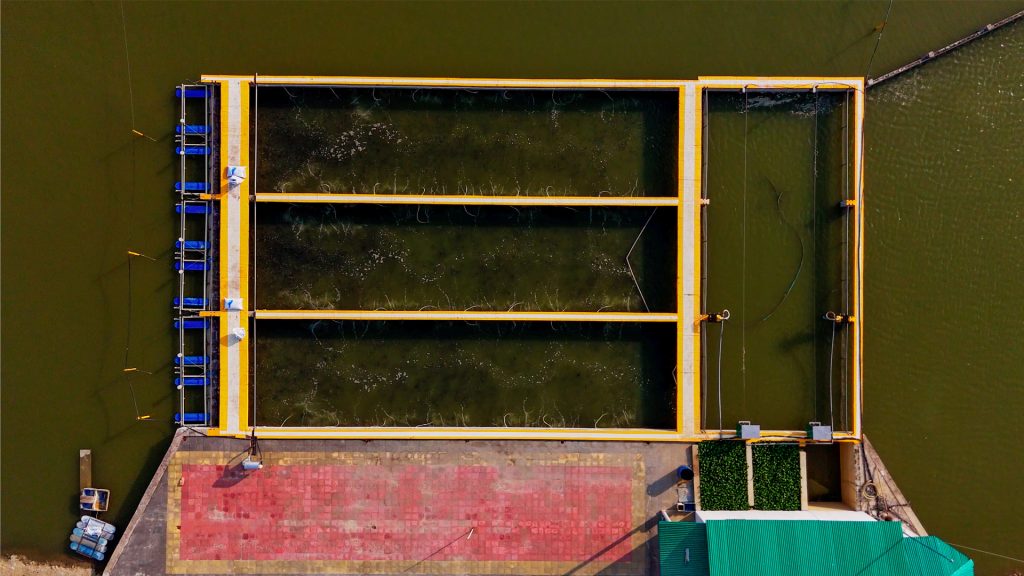
When high-quality fingerlings were combined with consistent management and solar-powered aeration, the results were strong. The trials reached an average production of 9,207 kg per raceway cell and an FCR between 1.26 and 1.50. These findings are now being used to teach farmers that a viable business case starts before the fish enter the water. It starts with the selection of the right inputs and reliable technical supervision to manage water quality parameters.
Focusing on barramundi as a next step
With the initial tilapia and koi carp trials complete, the partnership’s attention is turning to a species with strong commercial potential. An ongoing trial at the CoE in Cox’s Bazar is focusing on barramundi, also known as Asian sea bass. Unlike more common farmed species, barramundi commands a premium price in both local and international markets, making it an attractive option for intensive farming.
The trial will evaluate the growth performance and economic viability of raising barramundi juveniles in an IPRS environment over a single culture cycle. The goal is to generate the baseline data needed to confirm that high-value species can thrive in these systems. Barramundi’s performance in freshwater IPRS systems in coastal Bangladesh also remains largely unexplored, making this trial a valuable source of new insight.
Building a stronger value chain
The broader goal of the research and trials programme is to understand how different species perform under varying conditions and to translate that knowledge into practical guidance for farmers. By documenting survival rates, energy costs, and growth patterns across species and locations, the programme is building a roadmap for a modernised aquaculture value chain.
The trials are helping farmers and their partners move from traditional management practices to a data-driven approach where every decision is backed by evidence. That shift is what ultimately strengthens the value chain and contributes to improved food security in Bangladesh.