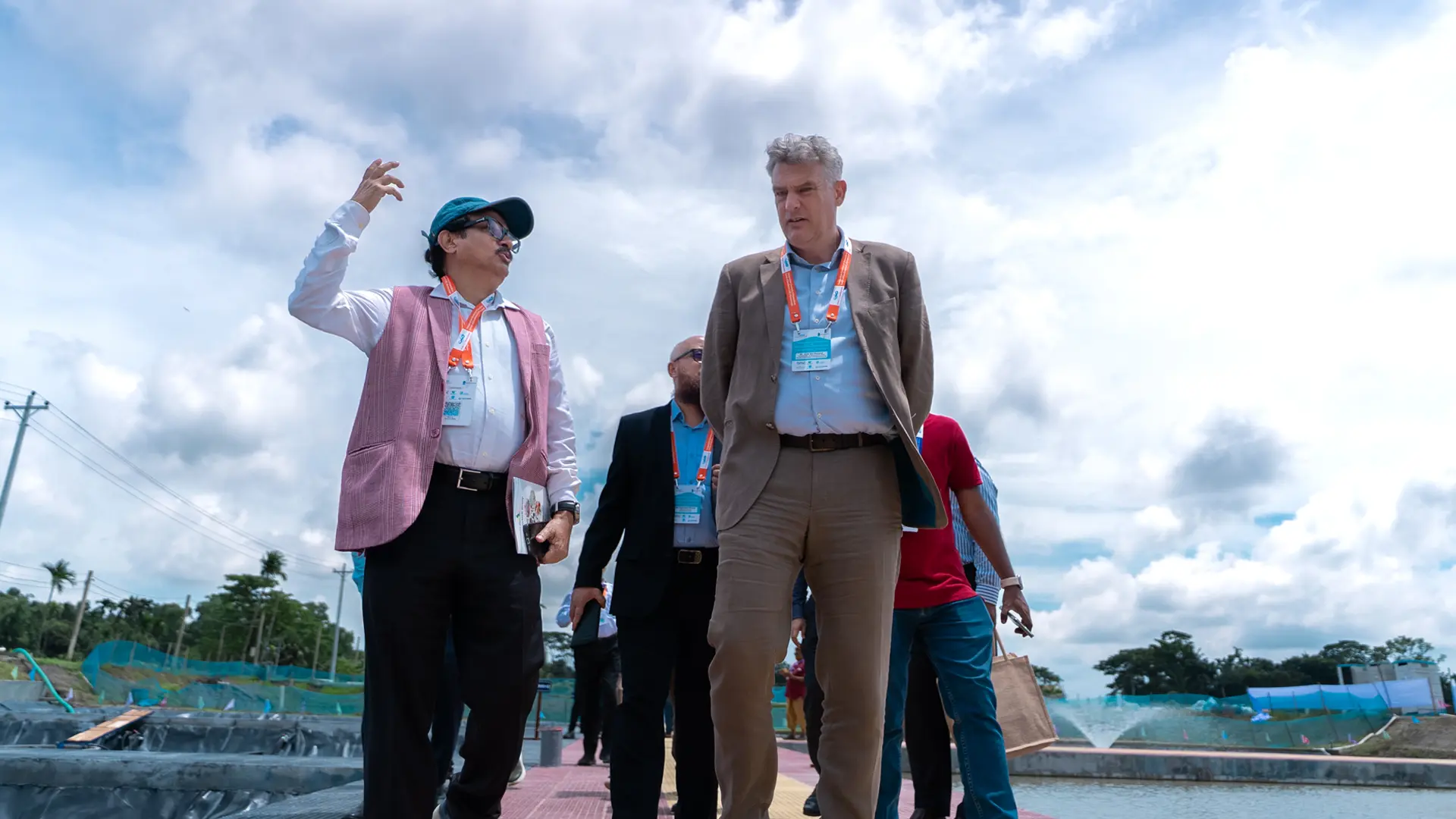
Bangladesh does not necessarily need more ponds to produce more fish. A significant opportunity lies in getting substantially more productivity from the ponds already in use.
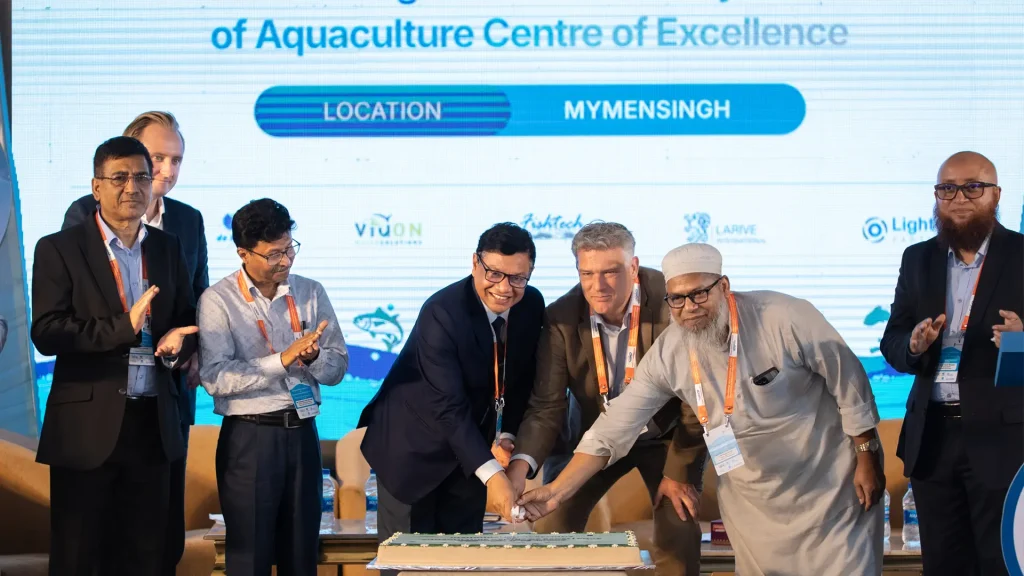
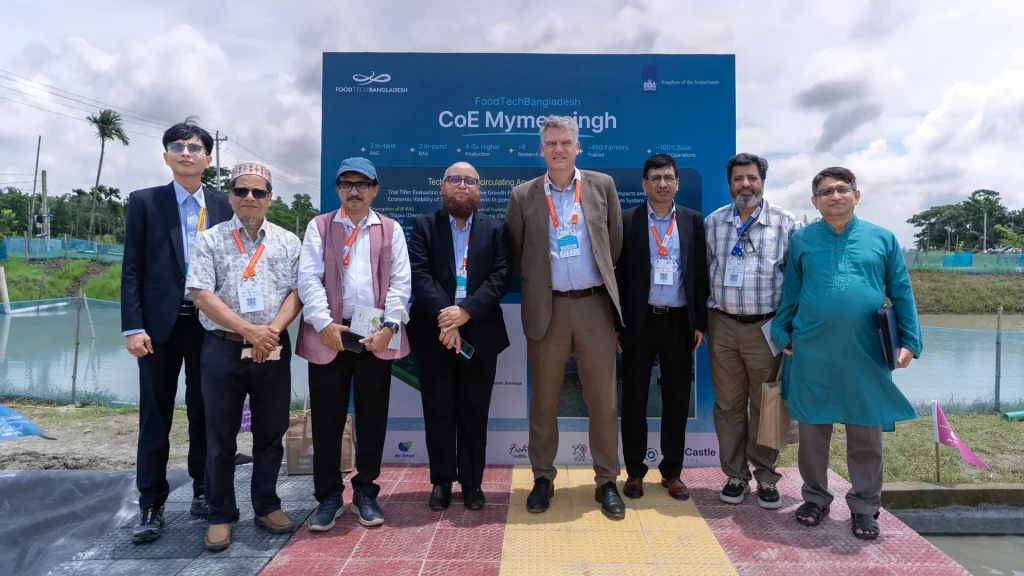
That principle is at the heart of the new FoodTechBangladesh Centre of Excellence in Mymensingh, officially inaugurated on 21 July 2026. The facility demonstrates how improved aquaculture systems can combine higher production and more efficient resource use to become a commercially viable investment case for farmers.
Making intensive aquaculture investable
The Mymensingh facility is one of four Centres of Excellence developed under FoodTechBangladesh, a EUR 6 million Dutch-Bangladeshi public-private-partnership (PPP) co-financed by the Embassy of the Kingdom of the Netherlands in Bangladesh.
The centre includes in-tank and in-pond recirculating aquaculture systems and serves as a demonstration, research and training platform. One of its most relevant applications is an in-pond recirculation system that allows farmers to upgrade existing ponds rather than develop additional production areas.
Trials indicate that the system can increase production capacity by up to seven times compared with traditional ponds, while offering an estimated payback period of less than three years.
The combination matters. Technologies rarely scale on technical performance alone. Farmers and aquaculture entrepreneurs also need to understand the investment required, operational implications and expected returns before committing capital.
As Larive International Senior Project Manager Rogier Becker explained, the facility developed from an empty field into an operational aquaculture system through close collaboration between Royal De Heus, FishTech (BD) Limited, Viqon Water Solutions, LightCastle Partners and Larive International.
The result is not simply a technology demonstration. It provides a setting where farmers can see the system operating, review performance data and decide whether the model can work within their own businesses.
Connecting technology with adoption
Bangladesh is already among the world’s major freshwater fish and shrimp producers. Continued growth, however, requires improvements in technical performance, resource efficiency, farm management and market connections.
FoodTechBangladesh was established in 2022 to address these challenges by combining international aquaculture expertise with local implementation capacity. The partnership is coordinated by Larive International and LightCastle Partners and includes FishTech, Gemini Seafood, Royal De Heus and Viqon.
Across the programme, four Centres of Excellence in Khulna, Mymensingh, Cox’s Bazar and Patuakhali have been developed to demonstrate improved fish breeding and cultivation techniques. More than 1,800 fish breeders and farmers are expected to participate in physical and online training.
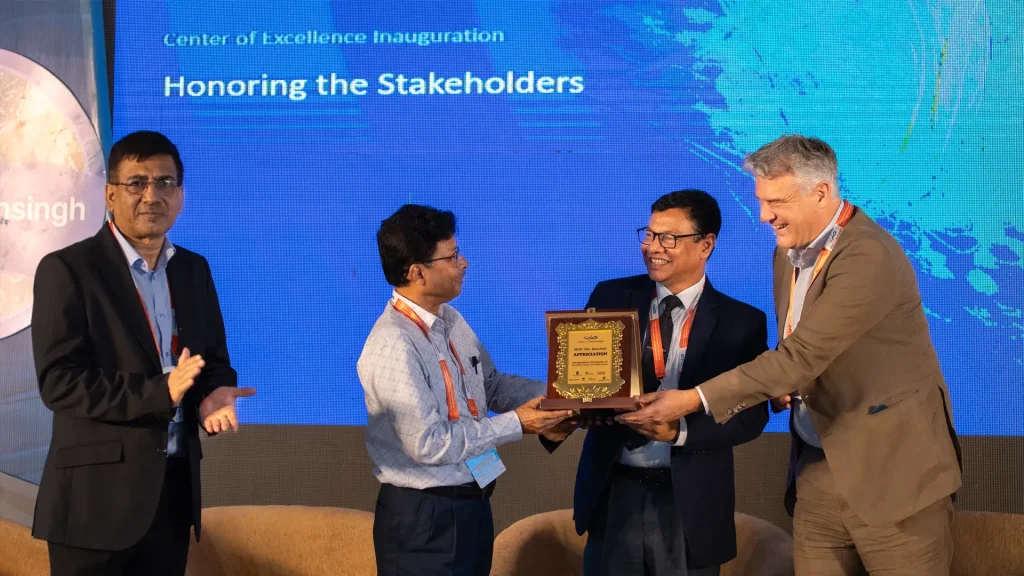
At the Mymensingh inauguration, representatives from government, business, research and academia saw the systems in operation. Dr. Md. Khaled Kanak, Director General of the Department of Fisheries, highlighted the opportunity to combine technology with government support to increase productivity from limited land.
H.E. Joris van Bommel, Ambassador of the Kingdom of the Netherlands to Bangladesh, emphasised another critical measure of success: whether farmers adopt improved practices, entrepreneurs invest and young people develop the skills required to operate new technologies.
Shykh Seraj, the Director & Head of News at Channel i, a notable news platform in Bangladesh, also attended the event. During the visit, he observed the technical demonstrations and engaged with the practical applications showcased for farmers and aquaculture entrepreneurs.
From demonstration to scale
That transition from innovation to adoption is central to the FoodTechBangladesh approach.
Centres of Excellence provide an environment where technologies can be tested under local conditions before wider commercial adoption. Demonstrations, farm visits, technical training and research trials help reduce the gap between introducing a technology and building confidence to invest in it.
For international companies, this model also provides a structured route into emerging markets. Larive International specialises in structuring collaborative partnerships, securing financing, and providing the strategic oversight needed to turn ambitious market-entry plans into operational realities.
The Mymensingh Centre shows what that approach can deliver. Innovation becomes relevant when farmers can see it work, understand the numbers and determine how it can strengthen their own operations.
FAQ
What is FoodTechBangladesh?
FoodTechBangladesh is a €6 million public-private partnership (PPP) co-financed by the Dutch government. Initiated and coordinated by Larive International and LightCastle Partners, it aims to enhance Bangladesh’s aquaculture sector through sustainable interventions, technical training, and the introduction of advanced Dutch farming technologies.
What technologies are demonstrated at the Mymensingh Centre of Excellence?
The facility functions as a research and demonstration hub for modern aquaculture production, specifically focusing on in-tank and in-pond Recirculating Aquaculture Systems (RAS). These systems improve water management, fish health, and production efficiency.
What is the commercial benefit of in-pond recirculation systems?
In-pond RAS technology allows farmers to increase their production capacity by up to seven times compared to traditional ponds without requiring additional land. The system presents a strong business case with an estimated payback period of less than three years.
How does Larive International support businesses entering emerging markets?
Larive International helps companies derisk their expansion into emerging markets by developing strategic business models, building local public-private consortia, securing financing, and leveraging trusted regional networks to ensure successful market entry and sustainable growth.